
 Audrey
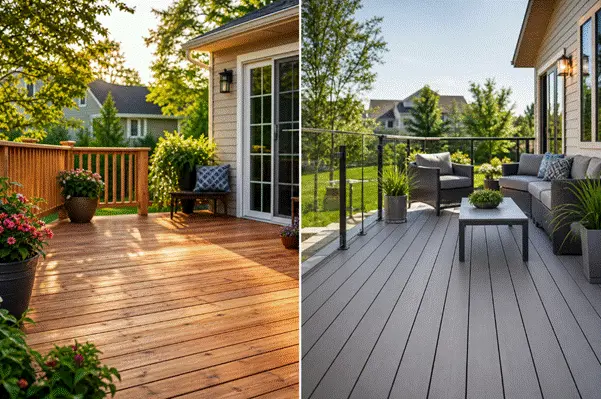
Picking between composite and wood decking is one of those decisions that seems simple until you actually sit down and think about it. Every year, tons of homeowners across the country face this exact fork in the road when planning a backyard upgrade. And here’s the thing, this isn’t just about picking a material. It’s a choice that sticks with you for 10, 20, sometimes 30 years.
I’ve looked into both options pretty closely, and I want to break it down the way I’d explain it to a friend. No fluff, no sales pitch. Just the real differences that matter when you’re staring at your backyard trying to figure out what to build.
What Are We Actually Comparing Here
Let’s get the basics straight first. Natural wood decking usually means pressure treated pine, cedar, or redwood. Pine is the budget option you’ll find at pretty much every home improvement store. Cedar and redwood cost more, but they’re naturally more resistant to rot and bugs.
Composite decking is a whole different animal. It’s a mix of wood fibers and recycled plastic, often called WPC (wood plastic composite). Most modern composite boards also have a protective outer shell, sometimes called capped composite. That shell is what stops the board from soaking up moisture or fading as fast.
So one is grown, the other is manufactured. That’s the core difference, and it shapes everything else on this list.
The Real Comparison: 5 Things That Actually Matter
Cost
Wood wins on day one. A pressure treated deck typically runs $15 to $25 per square foot installed. Composite usually lands somewhere between $25 and $45 per square foot. That gap is real, and if you’re on a tight budget, it’s hard to ignore.
But here’s where it gets interesting. Stretch the timeline out to 20 or 25 years and the math shifts. Wood needs constant upkeep (more on that in a second), and composite basically doesn’t. When you add up staining costs, board replacements, and the fact that a wood deck often needs a partial rebuild after 15 to 20 years, composite frequently ends up cheaper in the long run. Not always, but often enough that it’s worth running the numbers for your specific project.
Durability
Wood decks last around 10 to 20 years depending on the species and how well you maintain them. Composite decks can go 25 to 50 years, and a lot of that depends on the brand and the climate they’re sitting in.
I want to be honest here. Early composite products from years ago had a bad reputation for fading and mold. That stuff is mostly fixed now with capped composite technology, but it’s still worth checking reviews for whatever specific product you’re considering.
Maintenance
This is where composite really pulls ahead. Wood needs staining or sealing every one to three years to stay looking decent and to actually hold up structurally. Skip that step and you’ll see cracking, graying, and splintering faster than you’d expect.
Composite basically just needs a hose down once or twice a year. That’s it. No sanding, no staining, no weekend lost to a paint roller.
Look and Feel
Wood still wins here for a lot of people. There’s a warmth to real wood grain that composite hasn’t fully copied yet, and it feels cooler underfoot on a hot day. Composite can get surprisingly hot in direct sun, especially darker colors.
That said, composite has come a long way on the color and texture front. Multi-tone boards that mimic wood grain look pretty convincing from a few feet away. Up close you can tell the difference, but most people aren’t inspecting their deck boards with a magnifying glass.
Climate Resistance
This one gets overlooked a lot, but it matters more than people realize. If you’re somewhere with harsh winters and constant freeze thaw cycles, wood can crack and warp faster because it’s absorbing and releasing moisture over and over. Composite handles those temperature swings a lot better since it doesn’t soak up water the same way.
On the flip side, in hot and humid regions, untreated or poorly sealed wood is more prone to mold and rot. Composite tends to shrug that off, though it can still get moldy in shady, damp spots if you never clean it.
This is honestly the kind of detail that a good local deck builder pays attention to. Contractors who work in different regions, like the team at https://myroyaldeck.com/, tend to factor climate into their material recommendations because they’ve literally seen how these boards hold up over a decade of local weather. It’s not something you’d necessarily think about on your own, but it makes a real difference.
What About the Environment
Neither option is a clear winner here, honestly. Wood is renewable if it comes from a well managed forest, but harvesting still has an impact. Composite uses a lot of recycled plastic and wood scraps, which is great, but the finished product is much harder to recycle again once it’s worn out. If sustainability is a top priority for you, ask suppliers directly about sourcing and recycled content percentages instead of assuming either material is automatically the greener choice.
When to Pick Wood vs Composite
Go with wood if:
● Your budget is tight right now
● You genuinely love that natural wood look and don’t mind chasing it
● You’re fine doing yearly or biannual upkeep
Go with composite if:
● You want to basically forget about maintenance
● You’re planning to stay in the house for a decade or more
● Long term value matters more to you than the lower price today
Bottom Line
There’s no universal winner between composite and wood. It really comes down to your budget, your climate, and how much yard work you actually want to sign up for. If you’re still unsure, talking to a contractor who builds decks in your specific area is worth the time. They’ll know how each material actually performs where you live, not just on paper.